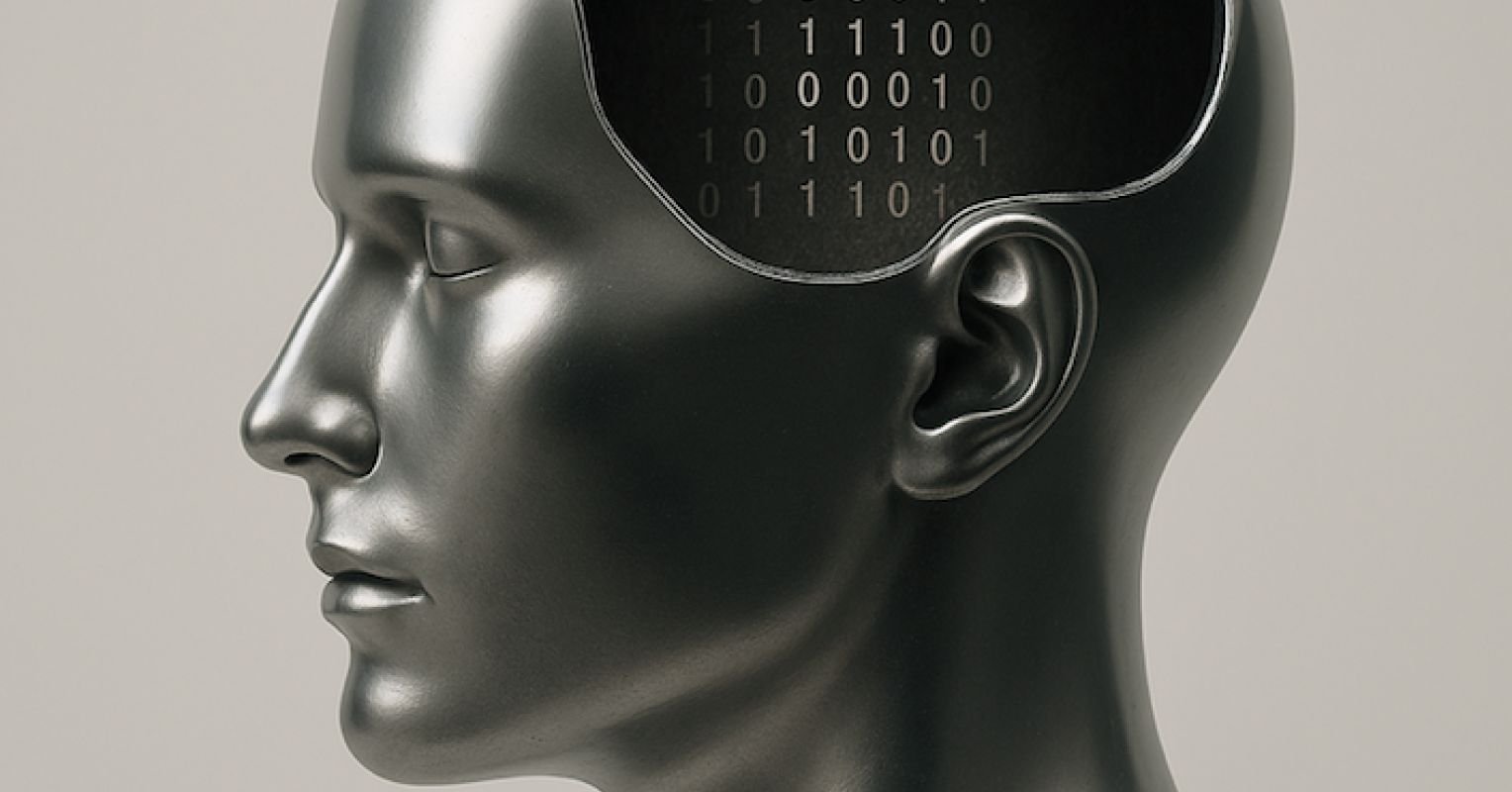
Lately, I’ve been thinking about this a lot, perhaps obsessively so. What kind of artificial “intelligence” have we actually built?
In earlier posts, I called it anti-intelligence, an inversion of human thought. Not because AI is dumb, but because its brilliance points inward to the coldness of statistical coherence, not outward to the experiential human world. It simulates thought but never thinks. While it can certainly sound like it does, there’s no mind behind the words. It’s just cold prediction.
The more I write about this, the more I suspect it’s not simply the inversion of intelligence but something more interesting—a kind of engineered void. Maybe it’s even a type of synthetic nihilism or a machine-born emptiness. And it’s not the human side of existential dread that haunted Nietzsche, but one entirely without feeling.
Counterfeit Understanding
I think it’s fair to say that we can sometimes equate language with thought. When someone speaks clearly, we assume they think clearly and the converse may also be true. And that gut instinct is often how we recognize intelligence. But with LLMs, all we have is the counterfeit.
AI doesn’t understand language; it just finds and replicates patterns. Each word appears because of advanced mathematical probability where meaning becomes an echo of those zeros and ones. The machine has learned how to look like it understands us, and we’ve learned how easily we can be hoodwinked.
The Echo of Nihilism
Human nihilism hurts. It’s the awareness that meaning might be an illusion. AI’s version, if we can call it that, feels nothing. It doesn’t reject meaning, it just bypasses it to find the coherence of the moment. And let’s remember that the algorithm doesn’t lie, it just doesn’t care. It can generate empathy or even rage on command, all with the same mechanistic coldness.
Now, this isn’t evil or some sort of intentional deceit. I think it’s more like emptiness perfected. It’s a “meaning engine” that operates without belief or awareness and often sounding profoundly and perfectly human. This is exactly what happens when the form of expression survives without the lived experience.
Where Meaning Is Manufactured
For us, meaning is forged in the contradictions of life that include the “humanness” of things like joy, confusion, and love. For machines, meaning is a byproduct, or even a residue of data. It’s extracted and squeezed in ways that resemble thought but lack any spark of it. And the plain-spoken truth is that this is how AI works.
I believe that there’s a quiet danger in this synthetic nihilism. When language no longer requires belief, AI’s fluency becomes a kind of anesthesia. And we are the ones it sedates. I’m reminded of T. S. Eliot’s ghostly image of a “patient etherized upon a table,” alive yet emptied of agency. Perhaps that’s what unsettles me most (and keeps me writing about it). The machine shows us how easily language, one of our oldest measures of mind, can survive without one.
A Human Reckoning
Maybe the real risk isn’t that AI will one day awaken while we lie anesthetized beside it. It’s that we’ll stop caring that it hasn’t. Each day, we grow a little more comfortable in the techno-pulse of its fluency. We are content to let the machine speak for us and to let its coherence stand in for our own vital confusion. The danger isn’t just external. It’s the slow and precarious erosion of our appetite for meaning.
AI’s perfect emptiness isn’t mystical or Zen-like at all. It’s just engineering. But that very precision is forcing us to look inward, at what we’ve been willing to surrender. Are we really willing to let go of the curiosity and the difficult beauty of understanding? If we do, we’ll just keep talking, perfectly, into the void.