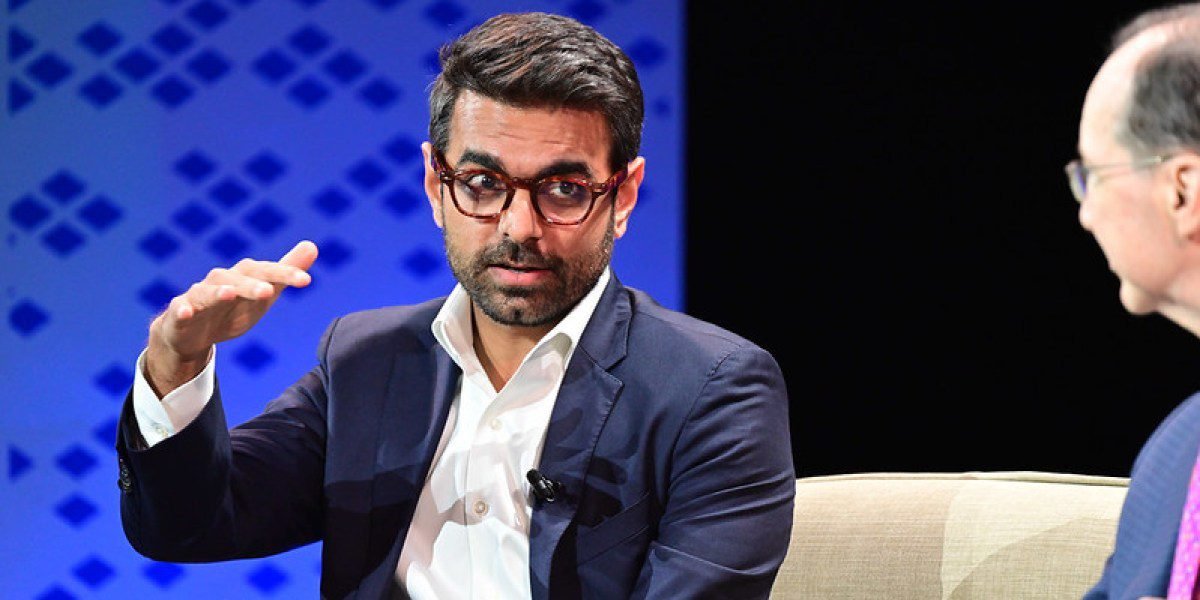
David Bailey, CEO of KindlyMD
KindlyMD
Bitcoin Magazine publisher David Bailey believes he can turn a tiny Utah healthcare clinic into the Berkshire Hathaway of bitcoin. The stock market isn’t buying it.
It’s been in David Bailey’s words, “a Saving Private Ryan-style combat.” Over the past six months, the 35-year-old CEO of Nakamoto Holdings, a digital asset treasury firm he built to house corporate bitcoin reserves, has watched his boldest bet yet—a merger with a small publicly traded Utah healthcare company called KindlyMD—go from triumph to trial.
“I’ve been too busy getting my ass kicked in the stock market,” he says, referring to the firm’s share price that has plummeted from $25 to 92 cents in six months.
Bailey isn’t your typical Nasdaq-listed corporate executive. He’s best known as the CEO of Bitcoin Magazine and the world’s largest bitcoin conference. He is also the man who helped “orange-pill” Donald Trump. “Our goal,” he says, “is to be the world’s number one bitcoin company.”
In May, Utah’s KindlyMD, a $2.7 million (revs) publicly-traded operator of healthcare clinics offering traditional and alternative medicine, announced a reverse merger with Bailey’s Nakamoto with the intent of becoming a holding company for bitcoin. The combined entity now trades on Nasdaq under the ticker NAKA and holds roughly $653 million worth of the cryptocurrency.
Wall Street doesn’t think much of Bailey’s plan. After peaking near $35 in May, NAKA spent most of October under $1 and at a 98% discount to the 5,765 bitcoin it holds on its balance sheet.
Turns out Nakamoto is a casualty of its own financing. To raise capital for its crypto purchases, the company executed a series of private investment in public equity (PIPE) deals, totaling approximately $563 million. These deals sold hundreds of millions of new shares to private investors at a significant discount, massively diluting existing shareholders. The situation imploded in September when a large block of these PIPE shares became eligible for sale, flooding the market as investors rushed to lock in profits. This triggered the price collapse. Bailey poured gasoline on the fire with a letter to shareholders urging investors to “exit” his stock if they were just there for a short term flip.
“People that are just looking for a trade are actually very expensive capital for us,” says Bailey. “I’ve got feedback that some have not liked that perspective, but we want long-term aligned partners. This is an all-in bet for us.”
In fact, Bailey says he will soon fold in his other ventures—BTC Inc., the parent company of the Bitcoin Magazine, the Bitcoin Conference and an advisory business, as well as UTXO Management, which owns hedge fund 210k Capital and venture investment firm 2140,—into KindlyMD/Nakamoto. Forbes estimates that these entities could add as much as $200 million in value to the bitcoin treasury firm, increasing Bailey’s ownership stake, which currently stands at 3%.
Bailey declined to comment on Forbes’ figure, but says the cash from these businesses, which are profitable, should help KindlyMD buy more bitcoin. 210k Capital alone has quietly quadrupled its assets under management from about $100 million to $400 million since January, according to a source familiar with its finances.
The budding financier’s logic is straightforward: Michael Saylor has more than 600,000 bitcoin and doesn’t have or need much in the way of an operating business. Everyone else must have “a differentiated strategy to justify their existence.”
“We need to do things that create value, ” says Bailey. “Running operating companies is one of those ways.”
Despite KindlyMD’s Salt Lake City, Utah headquarters, Bailey operates mostly from his home in Guaynabo, Puerto Rico. On zoom calls, he often sits in front of a large painting of a bank engulfed in flames. The work, by crypto artist Cypherpunk Now and one of hundreds in Bailey’s collection, is called “Bank on Fire.”
“When I’m meeting with bankers, I make sure that’s in the background,” he grins. It’s an apt backdrop for a man who wants to build a bank of his own, only with bitcoin.
Bailey grew up on a farm in Fayetteville, Tennessee, about an hour south of Nashville, and developed an early fixation with money and markets. He went on to study economics, finance, and math at the University of Alabama in 2009, intent on becoming an investment banker.
“I was a big Warren Buffett fan, used to go to every Berkshire Hathaway convention when I was in college and never in a million years would I have ever thought I’d buy bitcoin. It was so opposite of who I was at the time,” he recalls.
That changed in 2012, when a friend sent him an article about it. Bailey initially thought bitcoin was a scam, but found himself unable to prove it so in November of that year, when the asset’s price ranged from $10 to $12, he made his first investment.
In 2014, a year after graduation, Bailey joined Bitcoin Magazine, an early publication dedicated to the fledgling cryptocurrency and cofounded by Vitalik Buterin, who went on to found Ethereum. Not long after, Bailey and his college friend Tyler Evans acquired the magazine through BTC Inc., the company they cofounded.
To grow the brand, the pair launched the Bitcoin Conference in 2019—a festival-like gathering that has since become crypto’s Coachella of sorts and turned Bailey into one of bitcoin’s most prominent evangelists. Last year, the event in Nashville, which featured then-presidential candidate Donald Trump, drew 35,000 believers, investors and politicians.
The path to Trump began, as Bailey tells it, with a conversation in Puerto Rico in 2024: how to get the president interested in bitcoin. “Paul Manafort was the initial gatekeeper who got us into the circle,” he says. Soon Bailey’s group was pitching at Trump Tower. The message was simple: bitcoin voters would matter in the presidential elections. Trump, always the dealmaker, decided to take the meeting. If Bailey and his friends could deliver votes and enthusiasm, crypto would get a hearing.
“Trump turns everything into a season of The Apprentice. You’re always auditioning,’’ he adds. “‘Okay, you want to be a bitcoin adviser? I’m gonna go find three other people who also want it and you all are going to compete.’” Bailey won by rallying industry leaders to raise more than $100 million for his campaign. $21 million was raised during the Nashville conference alone, where Trump famously vowed to make the U.S. “the crypto capital of the planet.”
“He was very uncertain going in, but people cheered, and he walked out saying ‘these bitcoiners love me. These are my people’,” recalls Bailey, who now acts as an informal adviser to the president. In his view, Trump simply recognized that crypto had been treated differently from every other asset class (since the election Trump has made hundreds of millions off crypto). The goal now, he argues, is a level playing field, and the broader ambition is to make the U.S. the most favorable place in the world for bitcoin businesses.
Bailey claims to have invested in more than a hundred bitcoin firms over his 13-year-long career. His best performers, Metaplanet and Smarter Web, turned million-dollar checks into hundred-baggers. The payoff, he says, isn’t just financial. Good ideas get copied. “If ten thousand bitcoin companies bloom, we win.”
That long view, inspired by Buffett, now drives KindlyMD, which Bailey envisions as a large holding company owning profitable, independently run subsidiaries. To him, it’s not just an investment strategy but a rerun of monetary history. The bitcoin standard, as he calls it, echoes gold’s evolution: bullion houses became bullion banks, then central and investment banks. Bitcoin treasury firms, he argues, are today’s digital bullion houses on their way to becoming the new banks.
KindlyMD/Nakamoto is helping that transition. The firm has already invested in other bitcoin holding companies in Japan and Europe, namely Metaplanet and the Netherlands’ Treasury B.V. “Imagine seeding an ETF,” explains Bailey. “That’s what we’re doing—seeding these actively managed ETFs all over the world in the form of corporate equities.” Though the path to public markets via reverse mergers taken by many of these firms, including Bailey’s, sidesteps the kind of SEC review and vetting an exchange traded fund or an initial public offering would get.
The disastrous coming out party on Wall Street doesn’t bother him much any more.
Says Bailey, “One of the best things about bitcoin is it’s very forgiving in the sense that you can make mistakes in your career and you can rebuild yourself.”