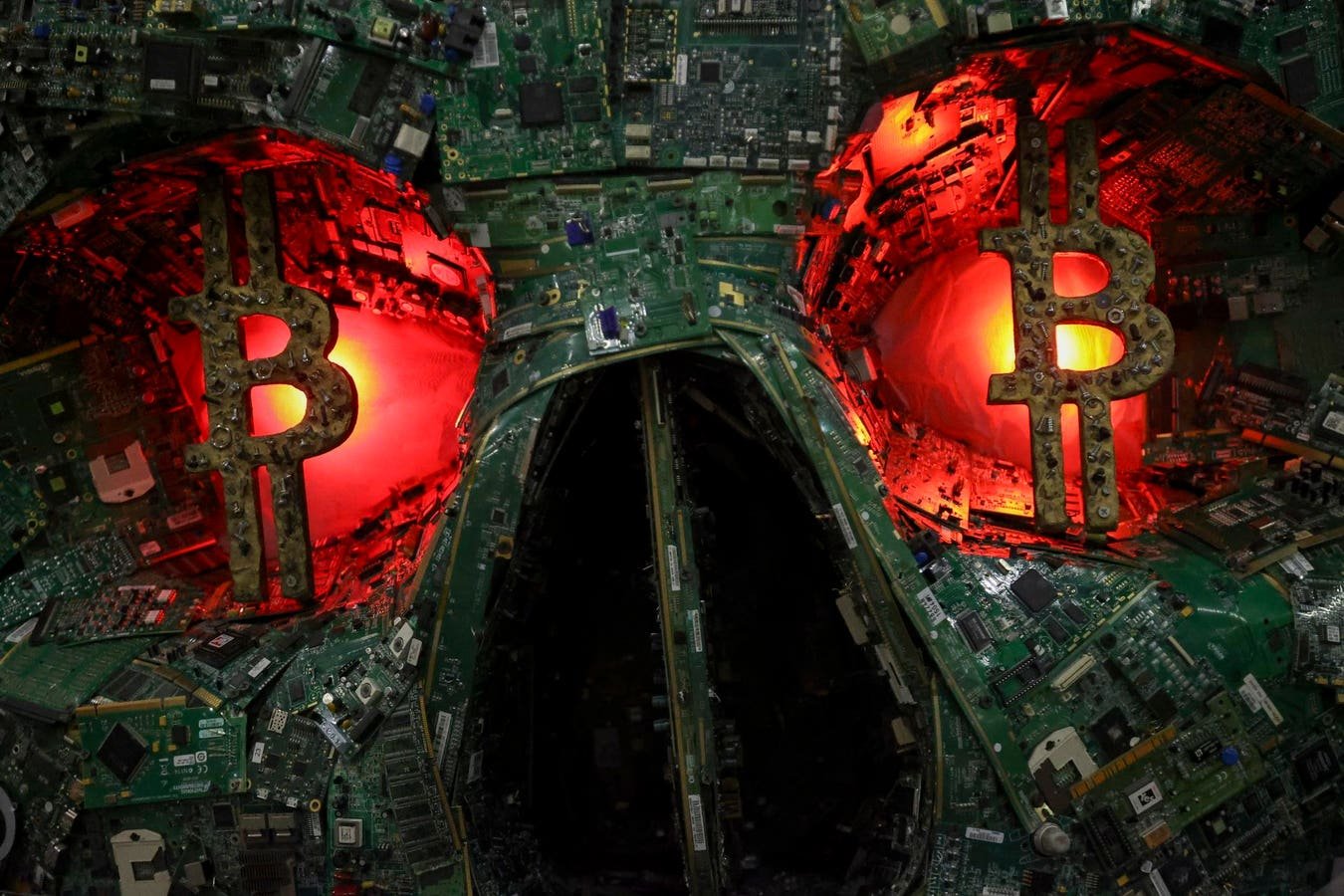

TOPSHOT – Bitcoin logos are illuminated by lights in a skull statue during The Bitcoin Conference at The Venetian Las Vegas in Las Vegas, Nevada, on May 27, 2025. (Photo by Ian Maule / AFP) / RESTRICTED TO EDITORIAL USE – MANDATORY MENTION OF THE ARTIST UPON PUBLICATION – TO ILLUSTRATE THE EVENT AS SPECIFIED IN THE CAPTION (Photo by IAN MAULE/AFP via Getty Images)
AFP via Getty Images
Bitcoin’s foundational document turned 17 years old on October 31. The white paper outlines the system’s design, combining proof of work, peer-to-peer transmission, and cryptography to solve the double-spending problem in a decentralized environment. Since its publication, the system has changed. A lot. From a humble start to being part of the global conversation, from $0 to over $100,000.
For instance, U.S. Treasury Secretary Scott Bessent posted on X commemorating the white paper’s anniversary, highlighting that “Bitcoin never shuts down.” He added: “17 years after the white paper, the Bitcoin network is still operational and more resilient than ever.” According to bitcoinuptime.org, the network has been active 99.9899832576% of the time since inception, with two brief failures in 2010 and 2013. A remarkable uptime, considering how widely used the network has become.
But its narrative and credibility isn’t the only evolved area. In technical terms, the protocol itself has transformed. In Bitcoin’s early days, users could mine with standard CPUs, send BTC directly to IP addresses, and store their wallets as .dat files, long before mnemonic phrases became standard. Today, Bitcoin has layers built atop it, as early Bitcoin adopters and proponents like Hal Finney once predicted.
What Are The Main Changes And Risks For Bitcoin
“Over the last 17 years, Bitcoin has grown from an experimental e-cash into a global money and reserve asset valued at over $2 trillion dollars. It’s being held by major institutions like BlackRock, and also transacted as money in much of the developing world,” nation-state advisory company JAN3 CEO Samson Mow told me in an interview.
Still, this growth has sparked debate over Bitcoin’s original ethos. According to Synonym CEO John Carvalho, traditional finance’s arrival has diluted core values:
“Legacy finance got involved and is successfully corrupting the ethos of Bitcoin. In the early days, the price going up was a bonus. Now it is an expectation.” Bitcoin, once seen as a freedom tool, is increasingly treated as a speculative asset and a TradFi product.
For Alex Recouso, CEO of the reallocation and citizenship advisory company CitizenX, the greatest risk isn’t external, it’s internal complacency. “The greatest risk to Bitcoin’s growth is its perceived inevitability. The belief that ‘nothing stops this train’ suggests a dangerous complacency—that there’s nothing more to be done. This kind of indefinite optimism poses a significant threat to Bitcoin, especially as the world becomes less free,” Recouso said.
Mow raised another concern: Bitcoin may stop being a bearer asset if users rely too heavily on custodians and centralized platforms. He also pointed to the current debate over recent updates to Bitcoin Core, the most widely used implementation of the protocol. Some argue these changes could lead to spam-like transactions that undermine Bitcoin’s function as a monetary network, shifting its value proposition toward data storage instead.
“There is also a concern that Bitcoin becomes a data storage system due to some recent changes in the Bitcoin Core client. However, there is a great deal of pushback against that, which is also leading more Bitcoiners to run their own nodes,” Mow said.
Carvalho echoed Recouso’s point about complacency and overconfidence.
“The biggest risk is our lack of humility. We have become overconfident, arrogant, and ignorant as a community. This is contributing to division, disruption, wasted resources on dead-end research, and capitulation to legacy financial systems and government controls.”
Now that the Bitcoin system has more than a decade and a half years of history been widely adopted for countries, companies, and large financial firms around the world, with its foundational document turning 17 years, the reflection among the community of what is next to come is significant. There are risks yet to evolve, like quantum computing, but the element that the system has shown the most is its resilience.