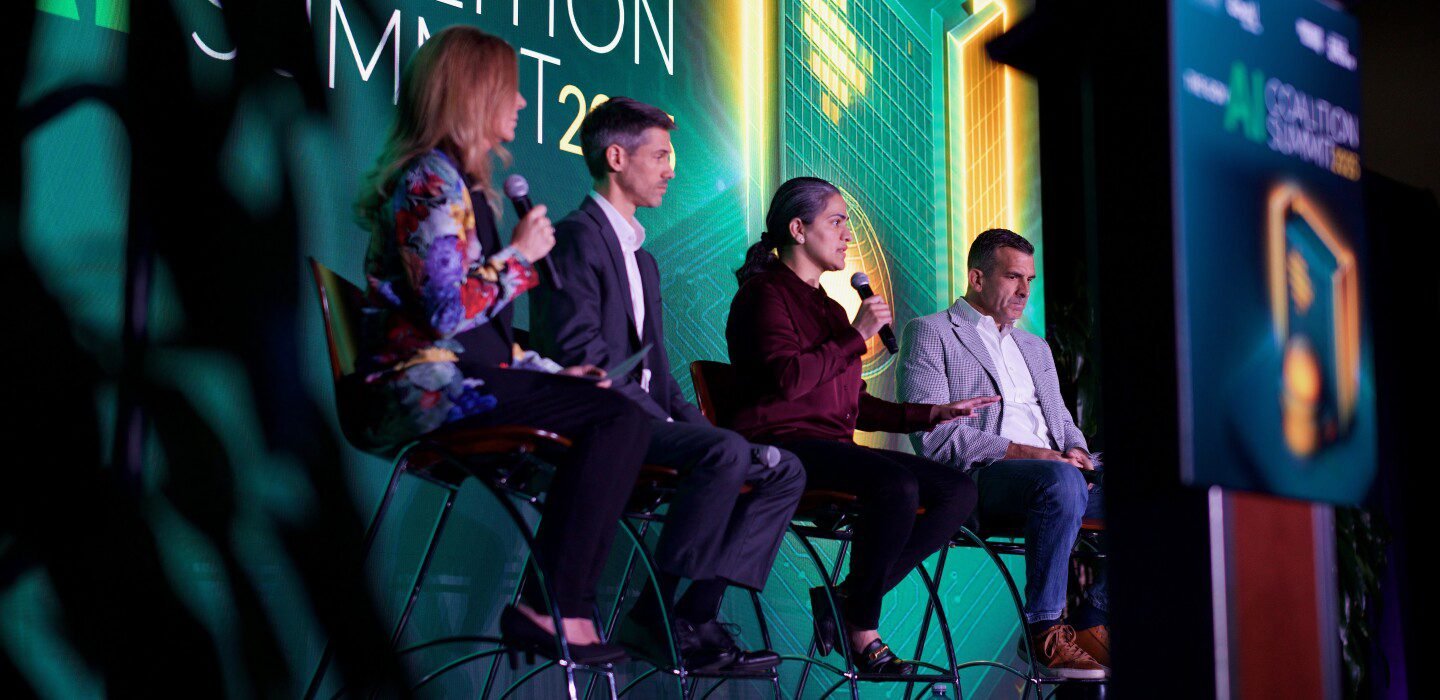
SAN JOSE, Calif. — Artificial intelligence is at the center of technology helping buses in San Jose, Calif., move 20 percent faster. AI is powering language translation services at City Hall, too, expanding communication well beyond just two or three languages. And the technology is helping the city identify roadway hazards and potholes.
“The pilots demonstrate value. And there’s so many more applications coming. The big ones are things like streamlining, permitting and procurement,” the Silicon Valley city’s Mayor Matt Mahan said Wednesday during “Leading with AI: How Public Leaders Are Shaping the Future of Government,” a panel discussion at the second annual GovAI Coalition Summit* in San Jose. “I think there’s a lot of runway here for making government services better.”
The city’s embrace of new AI innovation mirrors steps a number of local jurisdictions are taking with technology to improve service delivery, sharpen efficiencies and save money. These moves, however, happen against a backdrop of AI policy paralysis at the federal level and in a number of statehouses, observers said.
“There are some folks, particularly over a particular age, you have to help them spell AI,” Sam Liccardo, the Democratic congressman who represents San Jose, said during the panel. “Either you’ve got the tech-bashers, and the bed’s too cold. Or you’ve got the oligarch prostrators, and the bed’s too warm. And we’re looking for the Goldilocks approach.” Liccardo preceded Mahan as mayor of San Jose.
This, he said, “… isn’t going to be an approach that simply rejects and bashes tech at every opportunity because it polls well. But how do we utilize innovation to improve the quality of life in our communities?”
At the state level, California lawmakers are paying attention to AI, its opportunities and areas of concern, Aisha Wahab, a Democratic state senator who represents portions of Silicon Valley, said. She noted that about 60 AI-related bills were introduced in the California
Legislature last year, with 17 landing on Gov. Gavin Newsom’s desk.
“We are on the cusp of an industrial revolution that is like no other we have seen before,” Wahab said during the panel.
“On the state level I think that there is a lot of fear when it comes to this,” she added, noting much of the legislation “is about safeguards.”
While being open to AI’s possibilities in innovation, Wahab said she helped to lead a bipartisan movement to protect women, children and vulnerable communities “from the dark side of what technology can be used for.”
At the state level, “we are deeply concerned with making sure that people are not left out. And that is the big fear,” Wahab said, noting the public’s need for skills and resources invested in innovation. “And then also making sure that this technology has the safeguards to not put anybody at risk.”
Service delivery at the local level and upskilling the public-sector workforce remain a focus for cities like San Jose. Technology watchers point out this is where the impact can be significant and measurable.
“You always want to do more, but you just don’t have enough people. And people, obviously, are what make it all happen. So if you have a force multiplier, how incredibly impactful that could be,” Liccardo said. “I guarantee you, there is no limit as to what our citizens expect out of us, at the local level, in terms of providing those services.”
With new technologies comes a need for rethinking entrenched, decades-old public policy, Mahan said, advocating for a more “iterative” approach to policy.
“We should be constantly reassessing for the current rule set that we have,” Mahan said. “The rules of the road are important. I’m not anti-regulation. But is the totality of the regulation serving us in terms of delivering the outcomes our communities need?”
*The GovAI Coalition Summit is hosted by Government Technology in partnership with the GovAI Coalition and the city of San Jose.