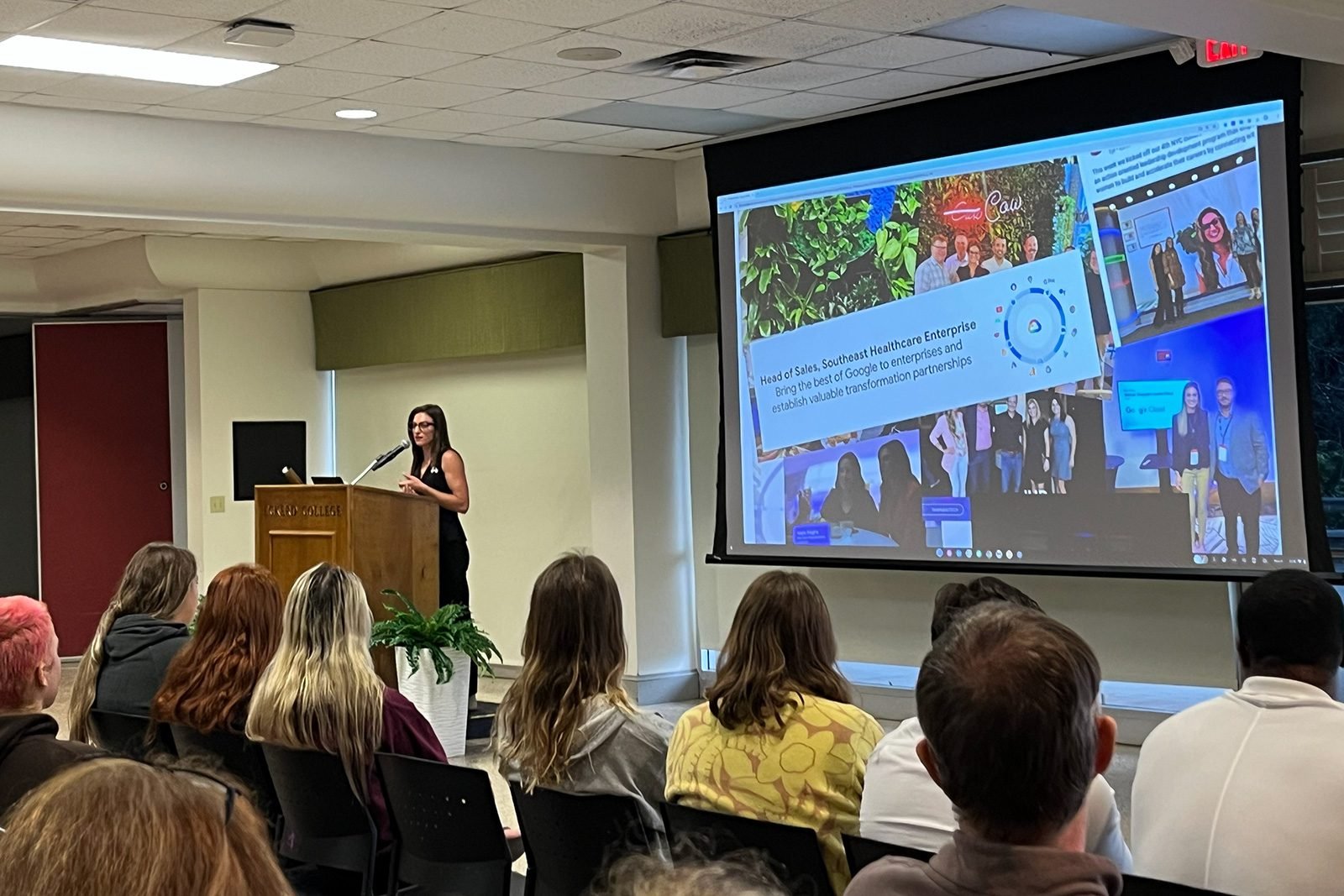
She emphasized the importance of adapting and growing with this technology, and it starts with curious exploration. Siagha recommended asking large language models such as Google Gemini or ChatGPT questions to get familiar with prompt engineering.
Moreover, she explained the current weaknesses in AI and stressed the utility of strengthening human capabilities in those areas.
“We need to make sure we strengthen the skills that AI is not good at,” she said.
In other words, one cannot outsource critical thinking and use AI effectively. It is up to humans to broaden their emotional reasoning, communication skills and empathy—all traits these tools lack.
“[We must] learn to lead with AI and not be led by AI,” she repeated throughout her talk.
She noted that without educating oneself on the application of AI, its ethics and limitations, it will likely outpace humans in a way that leads to harmful consequences. It must remain a tool, not a crutch.
Following her presentation, she answered student questions—which mainly involved concern about the environment, security and privacy.
Although not all fears can be quelled, the event allowed community members a space to learn about the rise of AI and how to prepare. To Siagha, this is the first step.