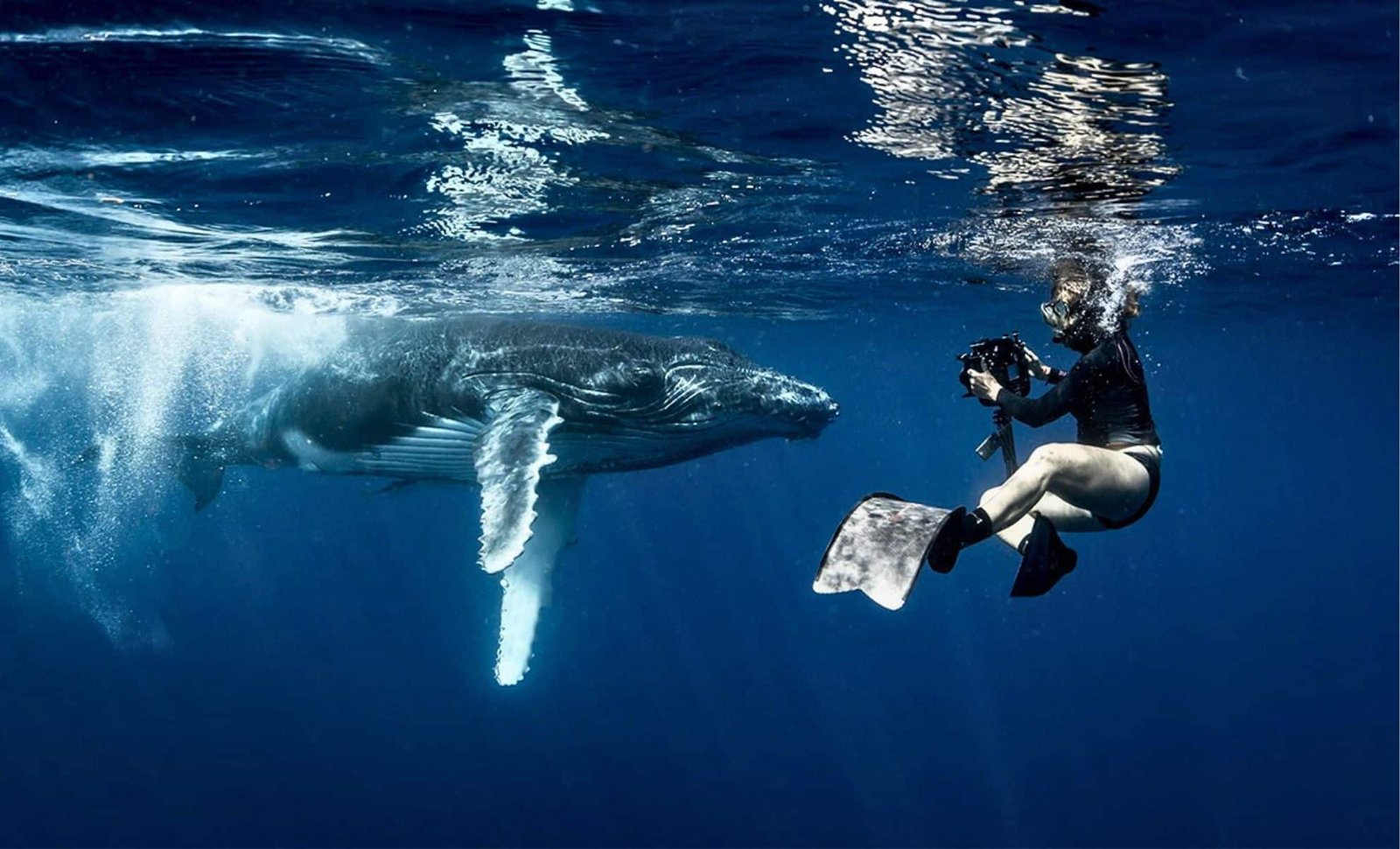
A humpback whale named Twain has done something previously thought impossible—engaged in a structured, back-and-forth exchange with humans. This 20-minute interaction, conducted off the coast of Alaska, marks a new frontier in our understanding of marine intelligence. Even more astonishing, the breakthrough was powered by artificial intelligence (AI), bridging the communication gap between humans and one of the ocean’s most enigmatic creatures.
AI deciphers the language of the deep
The experiment, led by Dr. Brenda McCowan and her team at the University of California, Davis, relied on a mix of machine learning, linguistic analysis, and underwater microphones to decode and replicate whale vocalizations. The results went far beyond expectations.
Instead of simple mimicry, Twain responded with structured vocalizations, suggesting a form of conversation. Researchers observed patterns resembling elements of syntax and grammar, indicating that humpback whales may use a sophisticated communication system—one far more complex than previously believed.
This scientific leap was made possible through a fusion of cutting-edge tools:
- AI-driven pattern recognition to analyze whale songs
- High-precision underwater microphones capturing intricate acoustic details
- Advanced linguistic analysis to identify possible language-like structures
The findings have ignited a paradigm shift in the study of animal intelligence and communication, drawing unexpected parallels between whale songs and extraterrestrial signal detection.
Humpback whales: cognitive giants of the ocean
Humpback whales (Megaptera novaeangliae) have long fascinated scientists with their intelligence and social behaviors. Their intricate songs can last up to 30 minutes, evolving across populations in a manner reminiscent of cultural transmission in humans.
Key traits that set these marine mammals apart include:
- Massive size: Up to 60 feet long and weighing 40 tons
- Epic migrations: Traveling over 5,000 miles between feeding and breeding grounds
- Complex communication: Producing elaborate sequences of clicks, moans, and squeals
For years, marine biologists have speculated that these sounds may contain embedded meaning beyond simple calls. Twain’s interaction suggests they were right.
Could whales help us detect alien intelligence?
The implications extend beyond Earth’s oceans. Dr. Laurance Doyle from the SETI Institute believes that decoding humpback whale communication could help refine the search for extraterrestrial intelligence.
Like whales, any advanced alien species may communicate through non-human patterns, requiring AI to identify, interpret, and respond. Researchers are now applying similar methods to:
- Analyze the complexity of alien-like signals
- Compare whale song structures to theoretical extraterrestrial messages
- Develop AI tools for detecting non-human communication patterns
If a humpback whale can engage in structured dialogue, what else might we be missing in the universe?
Ethical dilemmas of interspecies conversation
The ability to communicate with whales raises urgent ethical questions.
Should humans initiate conversations with wild animals? What are the risks of altering their natural behavior? Some experts warn that such interactions could:
- Disrupt whale social structures and migration patterns
- Unintentionally manipulate their communication habits
- Set a precedent for human interference in natural ecosystems
Yet, others argue that understanding whales on their own terms could revolutionize conservation. If whales can signal danger—such as entanglement in fishing nets or environmental hazards—shouldn’t we use this technology to protect them?
A future of multispecies collaboration?
Beyond ethics, some envision a multispecies communication network, where AI bridges the gap between human and animal intelligence.
Imagine a world where:
- Whales signal pollution hotspots, prompting immediate cleanup efforts
- AI translates animal distress calls, helping prevent ecological disasters
- Humans gain a direct line to the natural world, fostering a new era of coexistence
However, such a network carries risks. Could misinterpretation lead to misguided conservation efforts? Would reliance on AI distance humans from nature rather than bringing them closer?
The full study was published in the journal PeerJ.
Got a reaction? Share your thoughts in the comments
Enjoyed this article? Subscribe to our free Newsletter for engaging stories, exclusive content, and the latest news