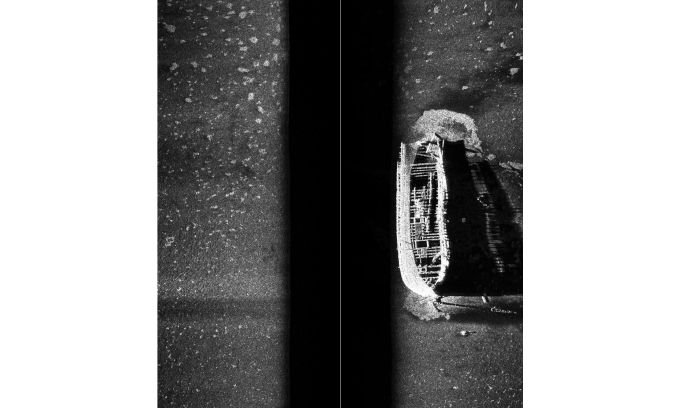
Artificial intelligence research in the United States has gained a new source of insight from the depths of Lake Huron. A unique dataset of shipwreck sonar scans, captured by researchers from the University of Michigan and Michigan Technological University, has been selected for inclusion in the National Artificial Intelligence Research Resource (NAIRR) Pilot. The dataset, known as AI4Shipwrecks, is one of only ten chosen for the national initiative focused on advancing artificial intelligence.
Launched by the National Science Foundation in 2024, the NAIRR Pilot is designed to connect researchers and educators with essential computing and training resources, supporting the rapid development of artificial intelligence across multiple domains. The selected datasets span a wide range of societal challenges, from preterm birth research to air turbulence prediction, and will help build an AI literate workforce across the United States.
“I am excited that the inclusion of our AI4Shipwrecks open source dataset extends its use from an ocean exploration research tool to a training tool, and now can be more easily accessed to help train others in artificial intelligence,” said Katie Skinner, assistant professor of robotics at the University of Michigan.
Crucial connection
The AI4Shipwrecks contribution highlights the increasingly crucial connection between well curated data infrastructure and the development of sophisticated artificial intelligence models. High quality, domain specific datasets, such as the shipwreck sonar imagery, provide the foundation for building robust analytical tools and for educating future specialists who will apply artificial intelligence to real world challenges.
Skinner led the field research efforts in 2022 and 2023, using an autonomous underwater vehicle in the Thunder Bay National Marine Sanctuary in Lake Huron near Alpena, Michigan. The dataset contains sidescan sonar imagery of 28 shipwreck sites within the sanctuary, which contains nearly 100 documented shipwrecks and more than 100 that remain undiscovered.
The dataset and its benchmark paper, “Machine learning for shipwreck segmentation from side scan sonar imagery: Dataset and benchmark,” were coauthored by Advaith Sethuraman, Anja Sheppard, and Onur Bagoren of the University of Michigan, along with Christopher Pinnow, Jamey Anderson, and Timothy Havens of Michigan Technological University. The expedition team also included Guy Meadows, senior research scientist and director of marine engineering technology at the Great Lakes Research Center at Michigan Technological University, and Corina Barbalata, assistant professor of mechanical and industrial engineering at Louisiana State University.
As the pilot progresses, the National Science Foundation intends to further integrate participating datasets with advanced computing environments, software, platforms, and collaboration tools, including resources from the AI Alliance. This expansion aims to ensure that datasets like AI4Shipwrecks can achieve maximum impact and accessibility for the broader research community.