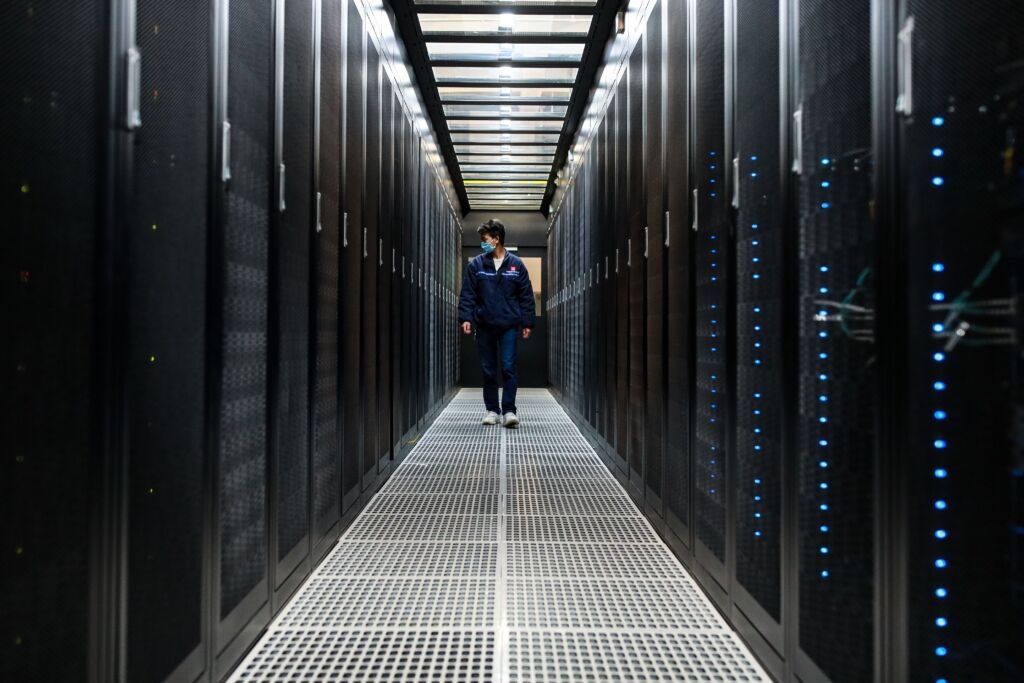
In February 2022, Beijing launched Eastern Data Western Compute (EDWC), a national megaproject to compute data from China’s developed eastern areas in its rural western regions, which enjoy a regional advantage due to plentiful renewable energy and lower average temperatures.
Artificial intelligence is the 21st century’s most transformative technology, pivotal to future geopolitical influence. Its development and deployment rely on computing power (‘compute’) housed in data centres, the hardware infrastructure that powers AI. This analysis examines the origin and implementation of EDWC, its role in Beijing’s multi-layered AI industrial policy, and its successes, failures, and implications for China’s standing in the global AI race.
Despite issues in implementation, EDWC has quantitatively strengthened China’s national compute capacity, increased data centre efficiency, and grown the renewable energy share of data centre electricity consumption. Since the project’s launch, China has made progress in building out data centres, albeit with logistical issues. While EDWC is a domestic policy, its results will carry wider geopolitical implications:
- Empowering the global competitiveness of China’s AI companies.
- Positioning China as a world leader in the data centre industry.
- “Data centre diplomacy”—integrating data centres into Beijing’s BRI offering.
- Growing China’s technological sovereignty.
- Developing PLA AI capabilities and facilitating their deployment.
- Adversely utilising third country (including European) data.
- Closing the computing power gap in US-China great power competition.
For Beijing, greater national compute capacity strengthens its position in the global AI race—and the west should pay close attention.