The University of Minnesota expelled a grad student for allegedly using AI. Now that student, who denies the claim, is suing the school.
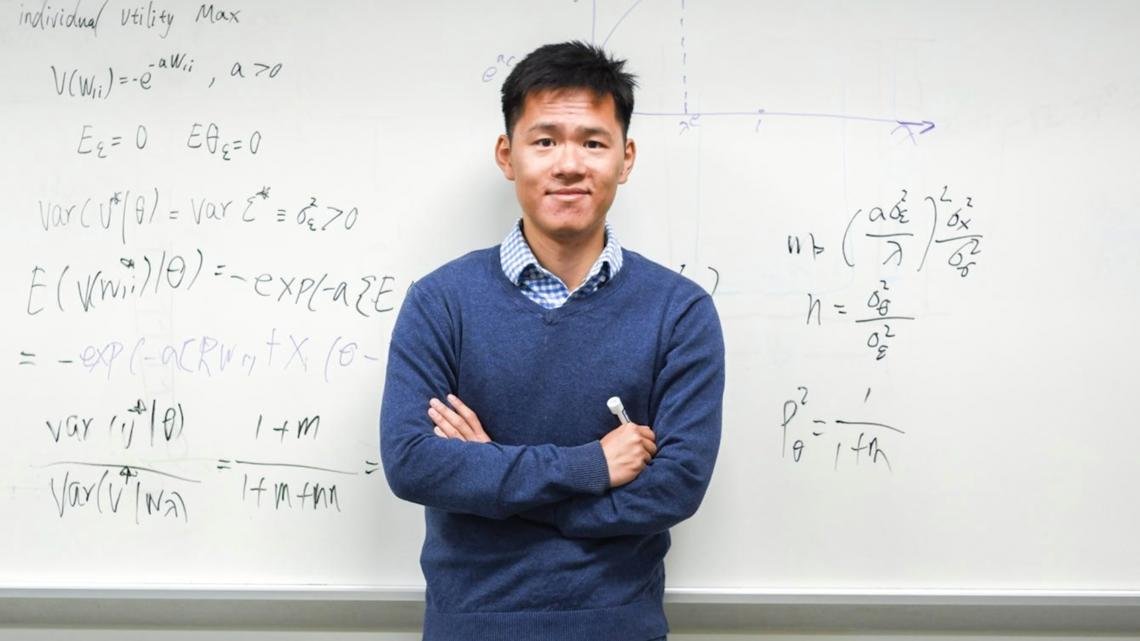
MINNEAPOLIS — Haishan Yang is believed to be the first student expelled from the University of Minnesota, accused of using artificial intelligence to cheat.
He’s not only denying it, but he’s also suing, and people are watching to see what happens.
Here is a breakdown of the case that could have widespread implications:
In August 2024, U of M graduate student Haishan Yang was on a trip in Morocco, remotely working on his second Ph.D. This one in Health Services Research, Policy, and Administration.
He needed to pass a preliminary exam before writing his thesis. He had eight hours to answer three essay questions. The test said he could use notes, reports and books from class but explicitly said no artificial intelligence.
He drafted his essays and turned them in.
“I think I did perfect,” said Yang in an interview with KARE. “I was very happy.”
Weeks later he’d get an email telling him he failed, accused by the grading professors of using an AI program like ChatGPT.
The university held a student conduct review hearing—a short trial of sorts.
Here is the evidence on both sides.
Professors’ Allegations
Yang let us review all the files in the case the professors used. After reading Yang’s exam answers, all four professors wrote they had “significant concerns” that the paper was not written in Yang’s voice and “involved concepts not covered in class.”
Professor Hannah Neprash then entered the exam questions into ChatGPT and compared those answers to Yang’s. The professors wrote certain parts that matched both in structure and language.
The professors cited several headlines and bullet points as suspicious.

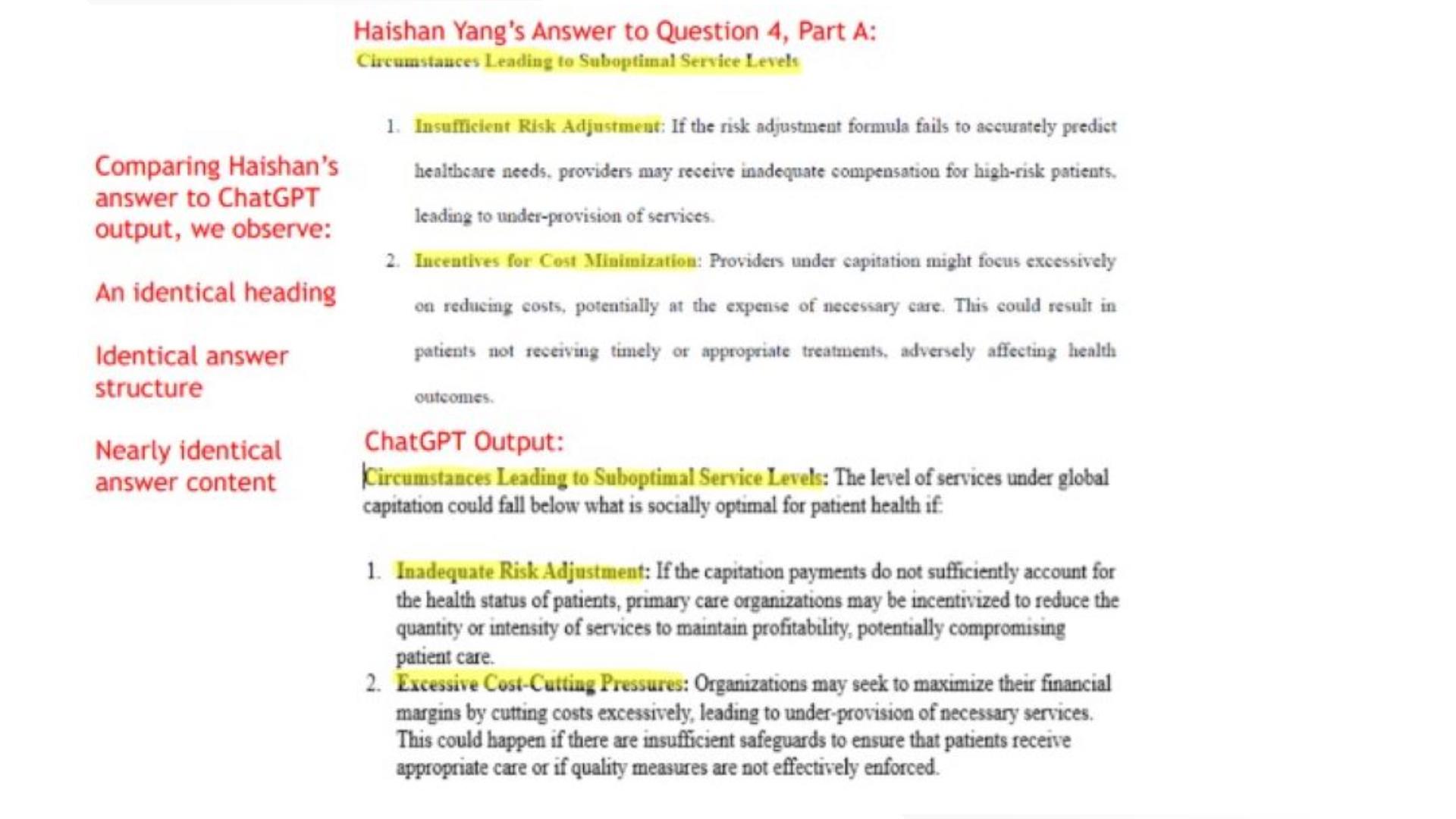
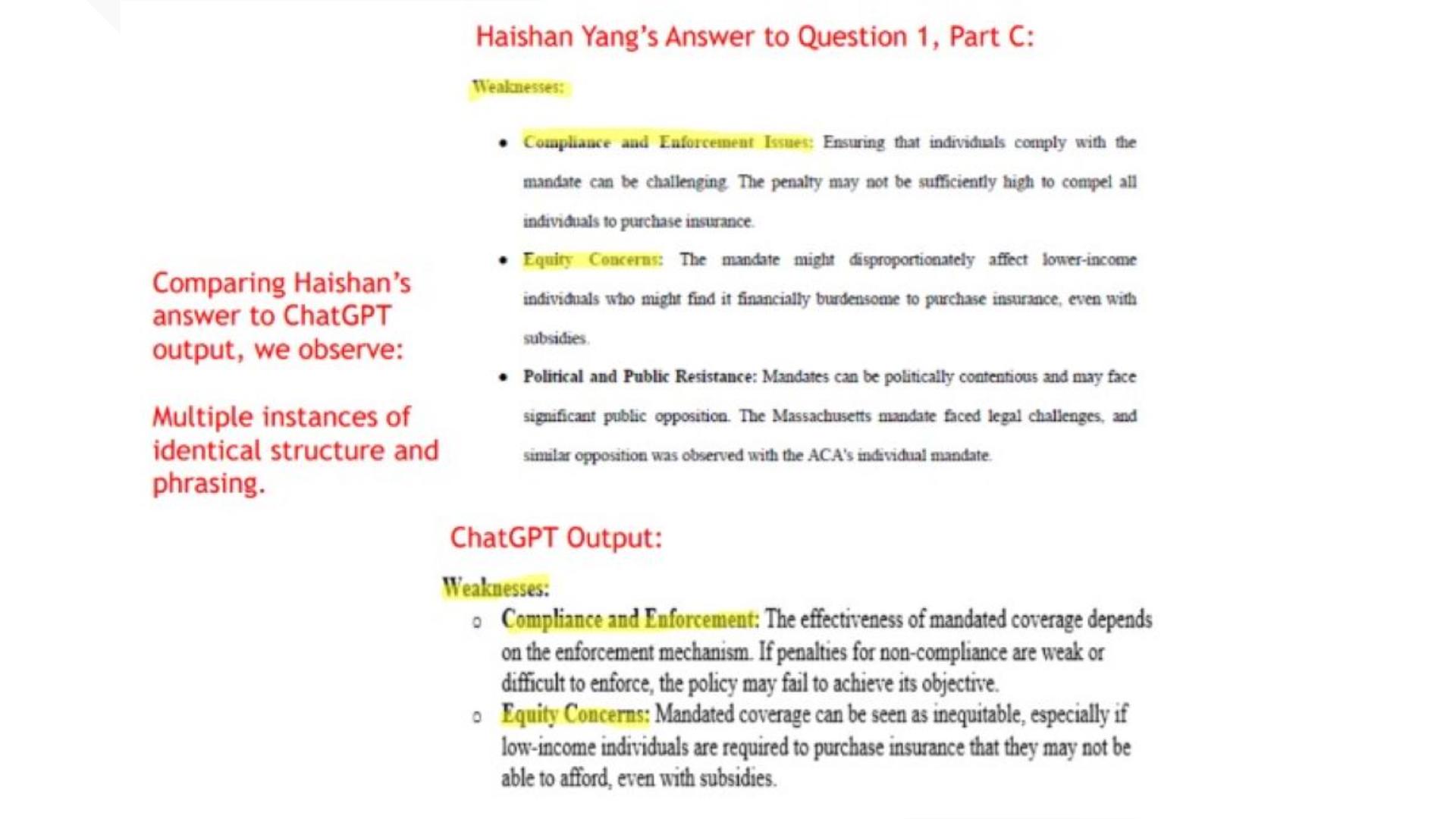
“I was struck by the similarities between the two that seemed extremely unlikely to be coincidental,” wrote Professor Peter Huckfeldt in a letter to the hearing committee.
In one answer, Yang used the acronym PCO, which stands for primary care organization. Even though Yang contends the acronym shows up in established journals, all four professors said none of them had ever before seen that acronym.
Where else does it appear? In one of ChatGPT’s answers.
The university presented another allegation, from a year prior, accusing Yang of using AI on a homework assignment. In a letter to OCS, Professor Susan Mason wrote one of Yang’s paragraphs ended with a “note to self” that said, “re write it (sic), make it more casual, like a foreign student write but no ai.”

Yang admitted using AI to check his English but denied using it for answers on the assignment, according to the letter.
“It seemed clear . . . that Haishan had used AI to generate this answer and had accidentally left either a note to himself or a prompt for AI in his answer,” wrote Mason in a witness statement about the incident.
Ultimately, the professor dropped the allegation, and Yang received a warning from the university.
As a final point of evidence, the professors put Yang’s test answers through the AI-detector tool GPTZero, which has a reputation for being inconsistent in detecting AI use accurately.
“I did not use ChatGPT on the test,” Yang said multiple times in our interviews.
Instead, he believes certain professors were out to get him. In the lawsuit, Yang alleges one professor edited the ChatGPT answers to make them more like his.
“Do you think that this was a conspiracy amongst the professors against you personally? I asked Yang.
“My advisor, Brian Dowd, certainly believes so,” Yang replied.
“What do you believe?”
Dowd declined an interview for this story, but in a letter to the committee he called Yang “the best read student he’d ever encountered.” He called the evidence against Yang “inconclusive,” and to the panel wrote, “In over four decades in our Division, I never have seen this level of animosity directed at a student. I have no explanation for that animosity.”
Yang points to an issue between him and certain faculty members in the program about a year before the exam. Records show the university cut Yang’s financial support after claims of poor performance and disparaging behavior as a research assistant.
“The graduate director told me, in person, that I should consider to quit,” Yang said.
He appealed the decision with support from his advisor, Prof. Dowd, who in a letter called the way Yang was treated by the department “an embarrassment.”
The university later apologized to Yang and agreed to restore his funding if Yang agreed not to sue.
Yang believes this history played a role in the cheating allegations against him.
As for the test in question, Yang gives two reasons why he believes ChatGPT’s answers were similar to his.
First, while it’s unclear precisely what health economics literature ChatGPT is trained on, Yang believes the program is basing answers off the same books and reports he studies from in class.
“It means my answer, probably similar to hundreds or thousands, millions of papers ChatGPT has absorbed,” Yang said.
Second, he says the exam answers seem close in parts, because he believes one of the professors altered them.
Yang discovered differences between the ChatGPT answers submitted at the hearing, and the ones originally shared between professors.
“This is the ethical question: They can keep generating and generating and generating and in some version, ‘Wow, it’s more similar,” said Yang.
In all, Yang points to ten differences between the ChatGPT answers shared among professors and the ones presented in the hearing.
How did the U’s mini-trial end?
After listening to all the evidence, the five-member panel decided unanimously that Yang—more likely than not—cheated.
For that, he was expelled from the university, which effectively canceled his student visa allowing him in the U.S.
In January, Yang filed state and federal lawsuits against Professor Hannah Neprash and others at the university alleging altered evidence and lack of due process.
Yang says he did use ChatGPT to help write those lawsuits.
The professor and other faculty being sued have not responded to the lawsuits in court as of today.
We reached out to multiple professors involved, and they did not get back to us.
A spokesperson for the university would not comment on the specifics of this case.
Jake Ricker, Senior Public Relations Director at the university sent this comment, “Federal and state privacy laws prevent the University of Minnesota from public comment on individual student disciplinary actions. As in all student discipline cases, the University carefully followed its policies and procedures, and actions taken in this matter were appropriate. The best source for the University of Minnesota’s perspective on this matter will be in our court filings.”